Monday, 31 May 2010

Flavour Compound of Last Week - Sulphate

Sulphate (SO4), or if you are American or illiterate, sulfate is common in most water supplies where it exists as a counter ion to calcium and magnesium. In beer it accentuates bitterness and at high levels makes this bitterness harsh. Yeast tends to metabolise sulphate into the malodorous hydrogen disulphide and sulphur dioxide. Why then would you want any in beer? Well, as indicated previously sulphate is required to balance the full palate sweetness conferred by chlorides.

The waters of Burton are quite high in sulphate so beers from this area have historically been dry, bitter and smell like the barman has farted in your pint glass before pulling the pint. These days all breweries adjust sulphate levels to achieve the desired flavour profile so the Burton Snatch is less prevelant than it used to be. Strangely some people still find the aroma of flatus in a beer appealing.

Sunday, 30 May 2010

23 Seawater Imperial Mild

Living by the sea in a beautiful part of England is nice, don’t get me wrong. The price you pay for this is the annual influx of what the Cornish call Emmets. People who wouldn’t drive at 4mph weaving all over the because the view is pretty road at home, people who wouldn’t use a junction on an A road as lay by at home, people who wouldn’t walk down a major road with a rucksack looking scornfully at anyone using it to drive to work at home. Put them in Cornwall and their common sense and desire to survive desert them. Fortunately the Cornish folk are laid back, tolerant and welcoming. I’ve been here for 9 years and if they can put up with me they can put up with anyone.

So, seawater in a beer “Are you mad?” you ask. Although I think I have already demonstrated my insanity beyond reasonable doubt, this time there is method in my madness. The bit of beer which is not alcohol is pretty much all water. Chemically, water is two hydrogen atoms bonded to an oxygen atom, H2O. The water that comes out of the tap, bottle or big bubbly thing in the office isn’t strictly water because it has salts dissolved in it. The water used to brew beer is also not just H2O because it has a precisely controlled salt composition. At least it has in decent breweries. Once the salt composition has been set brewers then call it liquor.

One of the salts important to beer flavour is chloride. http://brewingreality.blogspot.com/2010/02/flavour-compound-of-week-chloride.html Chloride levels are often raised in dark ales to give the beer a more sumptuous and slightly sour note. Sea water is very high in chloride so why not use it as the source of chloride in my Imperial Mild? Seawater also contains a number of salts not generally found in brewing liquor so my hope is that they contribute a marine feel to the beer.

If I was truly insane I would use 100% sea water for the beer. Seawater has nearly 20g of chloride per litre and for Mild I only need 0.3g per litre. The yeast would die before it could ferment the wort and even if it did the beer would taste horrendous. I also undersatnd that plans are afoot, north of the border for the world's saltiest beer and I am not one to stand in the way of barrier breaking. I am watering down my seawater to give me the chloride I need. I am also treating the seawater to remove unwanted bicarbonates which are never good news in brewing liquor. The seawater is going in before I boil the wort so anything which has dropped out of the back of a gull, seal or Pollock will be very dead before it ferments.

Malt: Mild ale malt, crystal, black and roasted barley

Hops: Fuggles, Goldings and Perle,

Yeast: Sharp’s

OG: 1065

Thursday, 27 May 2010

Experimental E Tasting


Today Heston was bottled along with the bitterness festival which is Hardcore 50 Hop IPA (per)version 3.0. Everyone on the bottling team were prop forwards. This is entirely insignificant. Both have developed subtle nuiances and novel twists during their residence en caske. Heston in particular has metamorphosed from a sanguined ulgy duckling to a rich and rounded leather-clad water bird (from hell).

I have just heard that there is going to be an e-tasting of some of my experimental beers on the chat room of the Burgandian Bable Belt web site http://www.babblebelt.com/chat.html. Those taking part will include luminaries such as Chirs Pollard, Jeff Evans and Des De Moor. It will be held on 3rd June at 8PM. I can’t think why for the life of me you would want to go to the chat room to torture yourself by watching other people enjoying (hopefully) beers, I’m just very pleased that it’s happening!

The beers that they are going to discuss are the Belgian-themed selection detailed below.


1. Sour Blonde Ale 7% ABV (3 years old)
2. Abbey Ale 7% ABV
3. “Dark Saison” ex blog 7.8% ABV
4. Sharp's St Enodoc Double 8.5% ABV
5. Wild Red Ale 8% ABV (2 years old but not wood-aged)
6. Sharp's Honey Spice Triple 9% ABV
7. 11% Amber
8. Massive Ale
9. “Trappist IPA” ex blog 10% ABV
10. Abbey Quadracept 12%

Monday, 24 May 2010

22. Ginger, Honey and Oat Strong Ale

I heard the other day that ginger beer is the next Magners. Magners of course was the next alcoholic lemonade. One of the first and most successful alcoholic lemonades was Hooper’s Hooch. I once met a bloke who worked for Bass when the brand was in development. With alcoholic lemonade as the brief they proposed a sophisticated beverage which was sweetened lemon juice fermented with Champange yeast. They even toyed with the idea of making it bottle conditioned because it was going to be cloudy anyway. He said that early flavour panels were blown away by the flavours of the dry, natural fermented lemon juice. So what did they decide on in the end? Lemonade-flavoured concentrate with water and industrial ethanol added. Very sweet, very simple, very cheap to make, very pointless.

At one point in the evolution of the market for alcopops, an accountant targeted a cost saving on the alcohol content and a switch was made to adding alcohol derived not from fermentation but from the oxidation of ethane from crude oil. I suppose if you are inclined to drink something which is fluorescent blue the prospect of 5% of it being produced at a refinery is probably not that daunting. I think that someone should draw the line somewhere.

Anyway back to the blog beer. I think that this beer is the most appealing sounding beer on the list so far (excluding offal ale of course). Oats honey and ginger are all beautiful (or for Master Chef viewers Busiful) flavours. I do make another beer with Ginger with my mate Rick from Padstow. With Chalky’s Bark I am careful with the ginger because I am using it to complement the lemon of the Brewer’s Gold hops. In this beer I can afford to be slightly less careful. Oats and honey give soul and body and in a strong beer this will be a big soul and kind of body that even Gok Wan couldn’t make look good naked. This gives me much more latitude to go for it with the ginger.

I’m using sun dried Indian ginger for this beer because it is less aromatic and more spicy (hot) than the African baking ginger. I am going to have to use some restraint with all of the ingredients because this beer is at risk of ending up like a fizzy Thai dipping sauce (maybe that’s the next Magners?). As well as rolled oats I am using golden naked oats which are nutty, juicy and just plain gawjus. On his last visit, Mr Simpson, my grain supplier informed me that they are called naked oats because they are harvested naked. I sincerely hope the famers stay clear of their combines.

Tech Spec:

Malt: Pale ale, rolled oats, golden naked oats

Hops: Brewer’s Gold, Pioneer, Simcoe

Spice: Ginger

Yeast: Old English Ale

OG: 1090

Saturday, 22 May 2010

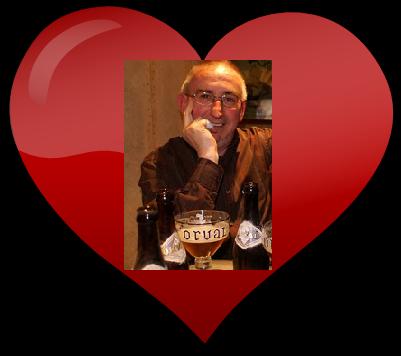
Mon coeur est plein


My fears, depression and uncharacteristic self pity about the derailment of Project Pater were unfounded. The above-pictured Monsieur Rock has graciously allowed me to reschedule my visit to the monastery.

If you can dream - and not make dreams your master;
If you can think - and not make thoughts your aim;
If you can meet with Triumph and Disaster
And treat those two impostors just the same;
Then you will be a brewer my son.
(K Price 2003)